Our Take Sep 20, 2026
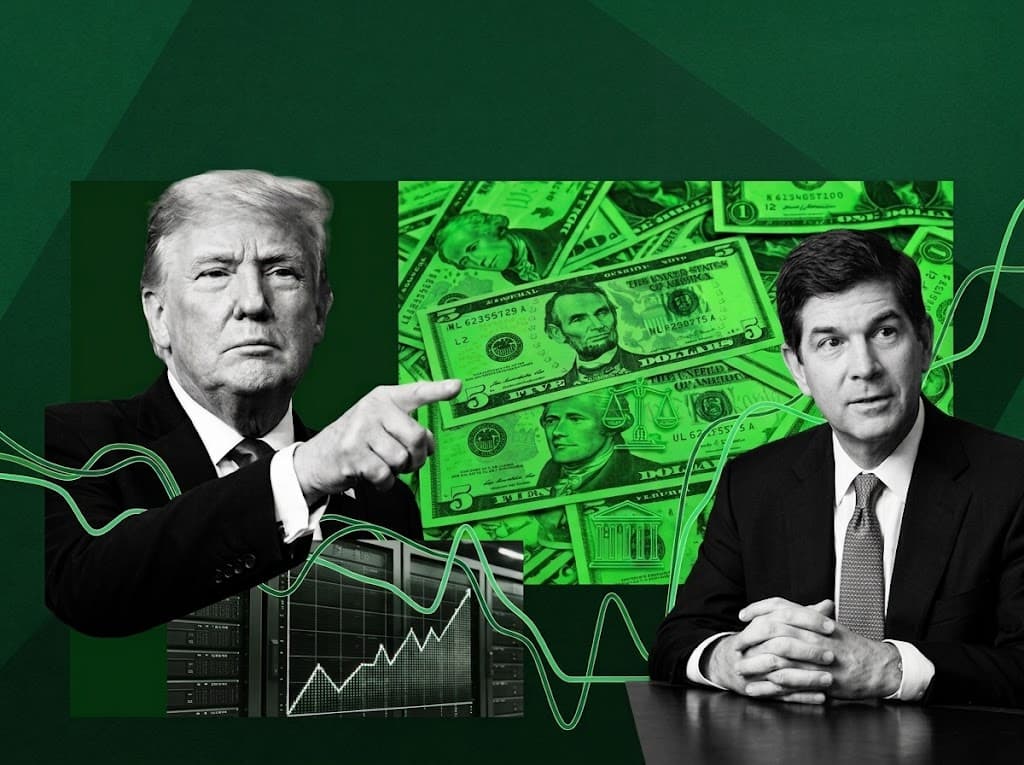
“It’s Better than Tariffs” – Weaponizing Trade Policy in a Technological Arms Race By threatening to cut off trade with trade-deficit nations unless the Federal Reserve cuts interest rates, President Trump is leveraging executive trade authority to override central bank independence and reduce debt-servicing costs on a national debt surpassing $40 trillion, prioritizing growth over fiscal austerity without legislative approval.
Read research Our Take Jul 17, 2026
AI’s Hidden Transition: When Innovation Becomes Infrastructure Global equity markets are undergoing a fundamental structural transition as artificial intelligence shifts from a high-margin, asset-light software narrative into an incredibly capital-intensive infrastructure cycle. With aggregate hyperscaler capex approaching an unprecedented $700 billion, investors are moving past the narrative to rigorously scrutinize the speed, durability, and efficiency of monetization. Using Microsoft as a key proxy case study, this report analyzes how physical capacity limits, shifting corporate debt structures, and a critical pivot from pure growth to Return on Invested Capital (ROIC) are reshaping asset valuations across the technology sector.
Read research Our Take Mar 30, 2026
With all the Changes in the World Who Would've Thought We Would Still be Talking About Oil The “petrodollar” is best understood as a subsystem inside a much larger architecture of U.S. dollar dominance: dominant-currency trade invoicing, deep capital markets, global banking and credit intermediation, and the legal/institutional infrastructure around dollar assets. Oil pricing conventions matter, but the dollar’s structural advantages are broader than oil which is why headlines about “the end of the petrodollar” routinely overstate what is actually at risk.
Oil’s macro importance has not faded with renewables because the world still runs on a set of hard constraints: a fossil-heavy energy base, liquid-fuels dependence in transport, and fast-growing non-combustion demand (petrochemical feedstocks). Meanwhile, the supply side is fragile because most upstream capital is spent just to offset decline from existing fields, and decline rates accelerate sharply without sustained investment.
As of late March 2026, the war involving Iran and the effective closure/disruption around the Strait of Hormuz has moved the system from a “headline risk premium” episode toward a flow shock problem: even large strategic stock releases are finite stocks being used to cover a potentially persistent loss of daily seaborne flows, with limited bypass capacity. The near-term inflation question is less “does CPI spike?” and more “do second-round effects reawaken in an economy already conditioned by 2021–2023 inflation?”—a mechanism policymakers have explicitly flagged.
Read research