“It’s Better than Tariffs” – Weaponizing Trade Policy in a Technological Arms Race
By threatening to cut off trade with trade-deficit nations unless the Federal Reserve cuts interest rates, President Trump is leveraging executive trade authority to override central bank independence and reduce debt-servicing costs on a national debt surpassing $40 trillion, prioritizing growth over fiscal austerity without legislative approval.
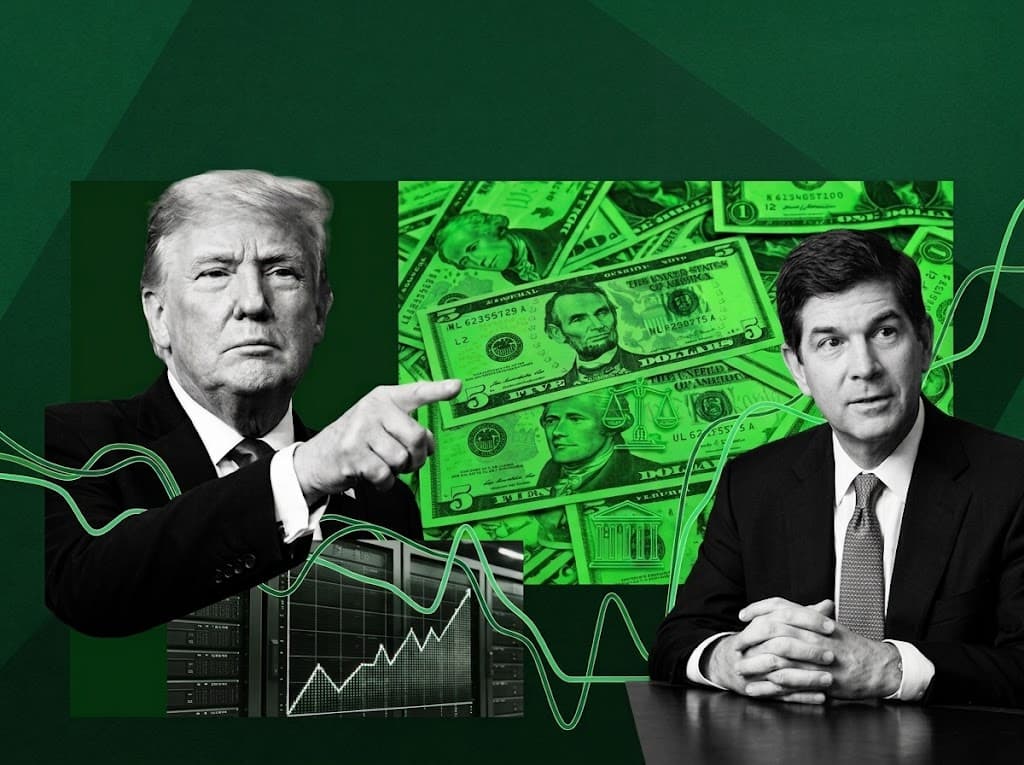
“It’s Better than Tariffs” – Weaponizing Trade Policy in a Technological Arms Race
President Trump’s trade strategy has evolved from social media posts and standard tariffs into a direct ultimatum: threatening to cut off trade with deficit countries unless the Federal Reserve slashes interest rates. This shift represents an attempt to use executive trade authority to override central bank independence and lower sovereign debt-servicing costs without any legislative authority on monetary policy. Confronted by national debt exceeding $40 trillion and escalating interest obligations, current policy discussions emphasize economic growth over fiscal austerity. This approach combines targeted government programs and stimulus, permanent tax extensions, and domestic reshoring through the One Big Beautiful Bill Act (OBBBA).
This growth blueprint directly intersects with the global technological and energy arms race. Winning the race for leadership in artificial intelligence and next-generation manufacturing requires unprecedented physical infrastructure buildout including data centers, deploying semiconductor fabs, and modernizing the national energy grid.
Because energy generation and transmission builds are heavily dependent on low-cost private financing, elevated interest rates act as a severe bottleneck. Projects that are financially viable at low interest rates become unfeasible under more restrictive rates. While state-backed competition in China can deploy low-interest, state directed loans to scale their energy and compute infrastructure, American private developers and hyperscalers must absorb high borrowing costs on their own balance sheets under frameworks like the Ratepayer Protection Pledge.
Consequently, this growth blueprint struggles to operate in a high-rate environment. Lowering interest rates is not only about funding federal deficit spending but rather the catalyst to unlock private capital markets, lower the cost of capital for energy developers, and supply the massive power backbone required to secure American technological dominance. Because the executive branch lacks direct control over the Federal Reserve's monetary policy, executive trade policy becomes the primary external lever to impact broader financial conditions.
Growth vs. Austerity: Re-evaluating the Economics of Fiscal Restraint
Traditional economic theory suggests that high debt burdens should be managed through spending cuts and tax increases. However, modern policy makers largely view severe austerity as counter-productive to long-term competitiveness, particularly following the 2008 financial crisis and the ensuing European sovereign debt crisis.
In an environment where the global competition in artificial intelligence, semiconductor manufacturing, and power grid expansion requires constant capital expenditure, reductions in federal support during this expansion phase could risk domestic positioning in critical technology sectors.
Excluding strategic spending like AI, grid infrastructure, and national security still leaves the budget constrained by mandatory entitlements and mounting net interest payments. Aside from industrial policy, there remain three main categories of federal spending:
- Social Security, Medicare, Medicaid and Healthcare Subsidies (Mandatory): Social security is nearly uncuttable entitlements funded by mandatory obligations. Cutting any of these benefits would require highly controversial legislative changes and would be wildly unpopular. Low-income programs have been trimmed but hardly enough to move the needle.
- Defense Spending (Discretionary): Bipartisan Support. Cutting national defense during global geopolitical tensions and technological arms races would face near universal opposition.
- Education, Transit, etc (Discretionary): Non-defense discretionary spending has room to be cut but again is too small to be enough for an austerity approach.
- Net interest on Public Debt (Mandatory): Non-negotiable, a default on National Debt would be detrimental to the U.S. as a leader in the global financial system.
If strategic industrial priorities (AI, energy, defense) are protected and Social Security and Medicare remain politically untouchable, other discretionary cuts cannot begin to balance the budget. This operational impasse is a potential reason why Trump is again calling for the Fed to artificially lower rates to create an environment where interest obligations are cheaper and GDP growth can stabilize the debt-to-GDP ratio.
Where Spending Fits Into The Plan
Blueprint of the OBBBA
The One Big Beautiful Bill Act (OBBBA) relies on tax incentives, R&D expensing, and targeted industrial support to expand the productive capacity of the domestic economy. The core thesis is to grow the economic pie so that it can eventually begin to cover the deficit. Critics of the bill argue that by relying on debt-financing to fund expenditure, the White House risks furthering the crisis by driving up the deficit and increasing interest rates.
However, a growth-led fiscal policy inherently requires accessible financing. Under the OBBBA, tax cuts and incentives are designed to lower the net cost of strategic corporate investment, encouraging developers and hyperscalers to deploy capex into physical infrastructure. In a high interest rate environment the benefits of these incentives are eroded by inflated WACC for private infrastructure projects creating friction against GDP expansion. When borrowing costs are so high, energy projects that look attractive under tax incentives become non-viable. Lower rates would create the fiscal environment the OBBBA requires to succeed, allowing for tax cuts and expenditure to turn into real GDP growth instead of going to net interest payments while lowering the burden of its debt-financing.
The AI Energy Arms Race and Private Capital Asymmetry
This demand for lower rates is made a necessity by the ongoing technological arms race with China. Maintaining dominance in artificial intelligence is no longer a software challenge. It is a physical infrastructure challenge that requires massive investments in data centers, semiconductor fabs, and power generation. The U.S. is in a race to build the future of AI but the high cost of borrowing is weakening its positioning.
In the U.S., development is funded by private markets and the cost of the financing used is highly sensitive to Fed rates. Modern U.S. power developers are now under the Ratepayer Protection Pledge which requires them to disconnect from energy grids and build their own power generation to power their data centers in order to not burden ratepayers. Furthermore, they face legal and physical constraints driven by multi-year interconnection queues requiring environmental reviews, local zoning, and transmission disputes.
In China, the same energy projects are financed by subsidized low-interest loans from state-owned banks. Their cost of capital does not depend on central bank rates allowing them to build unprofitable grid infrastructure at an unmatched scale.
How can a Volatile Market Cushion the Economy?
The mechanism where financial market volatility leads to lower interest rates and reduced borrowing costs is colloquially known as the “Fed Put”. When asset prices drop or credit markets freeze, financial conditions tighten. Because severe market stress can then spill over into the real economy potentially causing a recession, the Fed often intervenes by lowering interest rates or injecting liquidity.
The typical process is when market stress becomes a brake in the market as a whole. Severe volatility behaves almost like an interest rate hike. Banks pull back on lending, borrowing costs spike, and confidence drops. Because the Fed operates under a mandate of maximum employment and price stability, if the market is threatening a recession leading to layoffs the central bank cuts rates to restore stability. When this happens, yields on short term debt fall, lowering interest rates for consumers, variable-rate corporate debt, and U.S. treasury debt costs.
During late 2018, in part due to the U.S.-China trade war and the related tariffs, the S&P 500 dropped roughly 20% while high-yield corporate bond markets froze. The Fed Chair Jerome Powell in the “Powell Pivot” reversed his rate hikes in consecutive rate cuts. This lowered borrowing costs leading to economic expansion as markets regained liquidity.
This time however, analysts are warning of potential stagflation where market volatility is not caused by slowing demand or illiquid markets but rather energy crises and supply chain disruptions in a high-inflation environment where prices are more likely to pass to consumers.
Why Haven’t We Seen This Yet
A strategy of using trade policy to trigger a Fed Put style drop in asset prices has not occurred despite broad tariffs and trade threats. Equities have remained surprisingly resilient to trade noise and effects despite rising input costs. Earnings growth has been driven higher and higher by technology and AI productivity and we have seen corporate balance sheets absorb tariff costs in the short term. Markets have also been less inclined to take threats at face value as we have not seen the sharp declines in asset valuations following executive trade threats that might be expected. Because stock markets have proved so resilient, financial conditions have not yet tightened enough to force the Fed’s hand, leaving benchmark borrowing costs elevated for energy and compute infrastructure.
Historical Precedent
The renewed effort to lower borrowing costs to fund a national buildout and pay off the deficit echoes key moments in American monetary history. In a macroeconomic condition known as fiscal dominance, between 1942 and 1951 the Fed explicitly subordinated its monetary independence to the Treasury. To finance World War II and the subsequent economic transition, the Fed pegged short-term Treasury bill yields at 0.375% and capped long-term Treasury bonds at 2.5%. This decision allowed the U.S. government to let inflation run while maintaining low borrowing costs for its nationwide buildout.
This regime ended with the Treasury-Fed Accord of 1951, which restored central bank independence and established modern monetary policies. Today’s White House faces a similar macroeconomic environment given a public debt exceeding 100% of GDP while facing a critical infrastructure buildout.
While it’s true that the debt situation is similar, the modern U.S. economy is no longer the world’s largest manufacturer and devaluing the dollar through interest rate suppression would drive inflation up much faster as real goods would need to be imported. In addition to this, massive numbers of U.S. Treasuries are held internationally and a subordinate central bank would undermine the dollar’s status and sabotage real returns.
The Modern Adaptation
Executive Trade Redefining Monetary Policy
Lacking the legal authority to order a direct interest rate peg or even to lower the Federal interest rate, the White House turns to its most potent unilateral tool in its executive trade authority.
Historically, trade theory has viewed tariffs as microeconomic tools that increase deadweight loss and lower consumer welfare. The current administration is challenging this consensus arguing for a different set of macroeconomic principles:
-
Tariffs as Revenue-Generating Fiscal Stabilizers: While traditionally viewed as inefficient revenue sources compared to income or corporate tax, modern tariff policies have raised hundreds of billions of dollars under this administration reducing reliance on income taxes while funding domestic industries.
-
Nonlinear Pass Through: Standard economic models assume nearly a 1:1 pass-through between tariffs and core CPI. Modern empirical data shows a different picture where corporations are willing to–up to a certain point–absorb tariff costs, reroute supply chains, and substitute tariffed goods. This new model eases inflationary pressures giving policymakers confidence to use trade levers without fearing immediate inflation.
-
Executive Trade Policy as a Monetary Instrument: Again one of the newest ideas is the deliberate use of executive trade authority (Trump’s threat of a trade embargo with deficit partners) to tighten financial conditions artificially to force an independent central bank to cut rates without using any monetary policy levers directly.
By going from its long string of targeted tariffs to sweeping tariffs and more recently the threat of complete trade embargoes against deficit partners (“IT’S BETTER THAN TARIFFS!”), Trump is deliberately creating market friction, risking equity valuations, and disrupting supply chains. It is no secret at this point that Trump wants nothing more than lower rates and has been pressuring the Fed into fiscal dominance since he took office.
In modern financial markets, severe market drops and credit tightening leads to the Fed Put. Through this perspective, the trade volatility we have seen through this leadership is not an arbitrary policy stance but an indirect mechanism to impact monetary policy without legislative intervention. As such, the escalation of trade policy from a traditionally protectionist measure into an active tool for monetary leverage is reshaping modern macroeconomic theory.
Macroeconomic Risks and Structural Constraints
The Stagflation Trap and Unanchored Inflation
Using executive trade volatility to force monetary easing runs into the stagflation trap. Standard central bank models rely on market stress being caused by demand shocks where cutting rates can inject capital into an underutilized economy. Volatility caused by trade policy on the other hand is fundamentally a supply shock amplified by growing energy prices.
In a modern market without enforced price controls, this dynamic creates compounding inflationary pressures:
- Import Pass-Through Costs: While it is true that we have seen empirical evidence that much of tariff costs are being absorbed by corporations, long-term systemic trade friction forces those same corporations to pass tariffs costs onto consumers. Lowering rates in this environment risk unanchoring inflation expectations as prices rise.
- Energy Inflation: The infrastructure buildout required for the AI arms race puts structural upward pressure on electricity prices. Because power is an input to nearly all manufacturing, higher energy prices act as a direct inflation multiplier.
Global Markets and Capital Flight
Furthermore, post-WWII rate pegs operated under strict capital controls and domestic balance sheets. Today, much of the U.S. Treasury supply is held by foreign institutions and private investors. If the Fed cuts rates while inflation remains elevated, real interest rates risk turning negative. This causes several effects in the broader economy:
- Capital Flight and Depreciation: Capital flees low-yielding assets eroded by inflation for real yields elsewhere. This causes dollar depreciation driving up the costs of imported goods and creates inflationary pressure.
- Costs of Borrowing: If investors view monetary policy as overly loose for the inflation rate they can choose to protect themeselves from inflation by demanding higher yields on long-term debt. In this scenario, short-term rate cut savings are offset by the cost of long-term financing increasing the cost of the buildout.
Ultimately, using trade policy as a monetary lever risks creating the environment that it wants to avoid in persistent inflation, elevated long-term yields, and slow real GDP growth.
Forward Scenarios: Where Do We Go From Here?
The following scenarios are illustrative scenarios rather than forecasts for a Fed response to White House rate cut pressures:
- Controlled Pivot: The combination of equity market volatility, tightening credit, and slowing GDP growth forces the Fed to cut rates. As interest rates fall, the Treasury lowers its debt-servicing costs and the White House subsequently de-escalates its trade threats. The “Trump Put” is validated and the OBBBA growth plan continues operating in a cheap capital environment.
- Unanchored Inflation Leading to Stagflation: Fed cuts rates despite sticky core inflation reports driven by tariffs leading to a classic stagflationary economy. Direct consumer stimulus keeps demand high but erosion of real purchasing power and corporate margins leads to low economic growth and persistent inflation.
- Hawkish Escalation: Instead of easing, the Fed prioritizes price stability over financial asset prices. They raise rates to combat the inflation the trade friction creates. The cost of borrowing rises making projects expensive and raising the costs of net interest payments.
- High-Yield Standoff: Fed holds rates steady due to sticky supply-side inflation caused by the trade friction. Long-term yields face upwards pressure due to growing deficit concerns and borrowing costs across the real economy rising leading to slow growth and high capital costs.
Summary
The strategic friction between the White House and the Fed highlights a fundamental shift in American economic strategy where unilateral executive trade policy becomes an instrument of monetary leverage. With a national debt now exceeding $40 trillion, mounting net interest obligation, and an untouchable budget, the administration has explicitly rejected traditional austerity in favor of growth. This growth blueprint faces a constraint with the ongoing AI and energy arms race against China. Rather than suppressing growth directly, this technological race demands that expansion occur specifically within a low-rate environment. Because American developers must finance their own data center and grid infrastructure buildouts through private capital markets bearing the costs under consumer protection mandates like the Ratepayer Protection Pledge, elevated benchmark interest rates inflate the cost of borrowing and consequently access to financing rendering already staggeringly expensive projects infeasible. Lacking the legal authority to directly lower rates as the Treasury did before 1951, the White House has chosen to deploy broad tariffs and total trade embargo threats to manufacture an economic environment in which markets are volatile forcing the Fed to lower rates in a “Fed Put”. To put it simply, a possible strategy seems to be attempting to recreate a post-WWII financial repression to lower net interest payments and fund an unprecedented infrastructure buildout. Yet under this framework, if trade policy leads to supply shocks and stagflation or runs up long-term yields, it would risk increasing the debt it aims to service and make the infrastructure buildout even more expensive that it already is.
References
- SIEPR Policy Brief: U.S. Economy 2026 - What to Watch
- White House Economic Report: The Economic and Fiscal Benefits of OBBBA
- Federal Reserve Bank of Richmond: Revenue Raised by Tariffs
- Wall Street Journal: Trump, Federal Reserve, and Fiscal Dominance
- Financial Times Policy Coverage (General)
- St. Louis Fed: Tariff Effects on Inflation
- Financial Times: Monetary & Trade Analysis
- Reuters: Fed Rate Hike Back in Focus After Strong Jobs Report
- BNN Bloomberg: How Companies Are Avoiding Passing Tariff Costs to Customers
- Financial Post: Tariffs May Hike Consumer Prices
- RBC Global Asset Management: Tariffs and Rising Yields
- BlackRock Insights: Tariffs, Economy, and Portfolio